


How long it takes to get licensed and bonded in California
How long it takes to get licensed and bonded in California, the steps after the exam, and what can stall a CSLB license. Plain guide for contractors.
Posted on: November 13, 2026
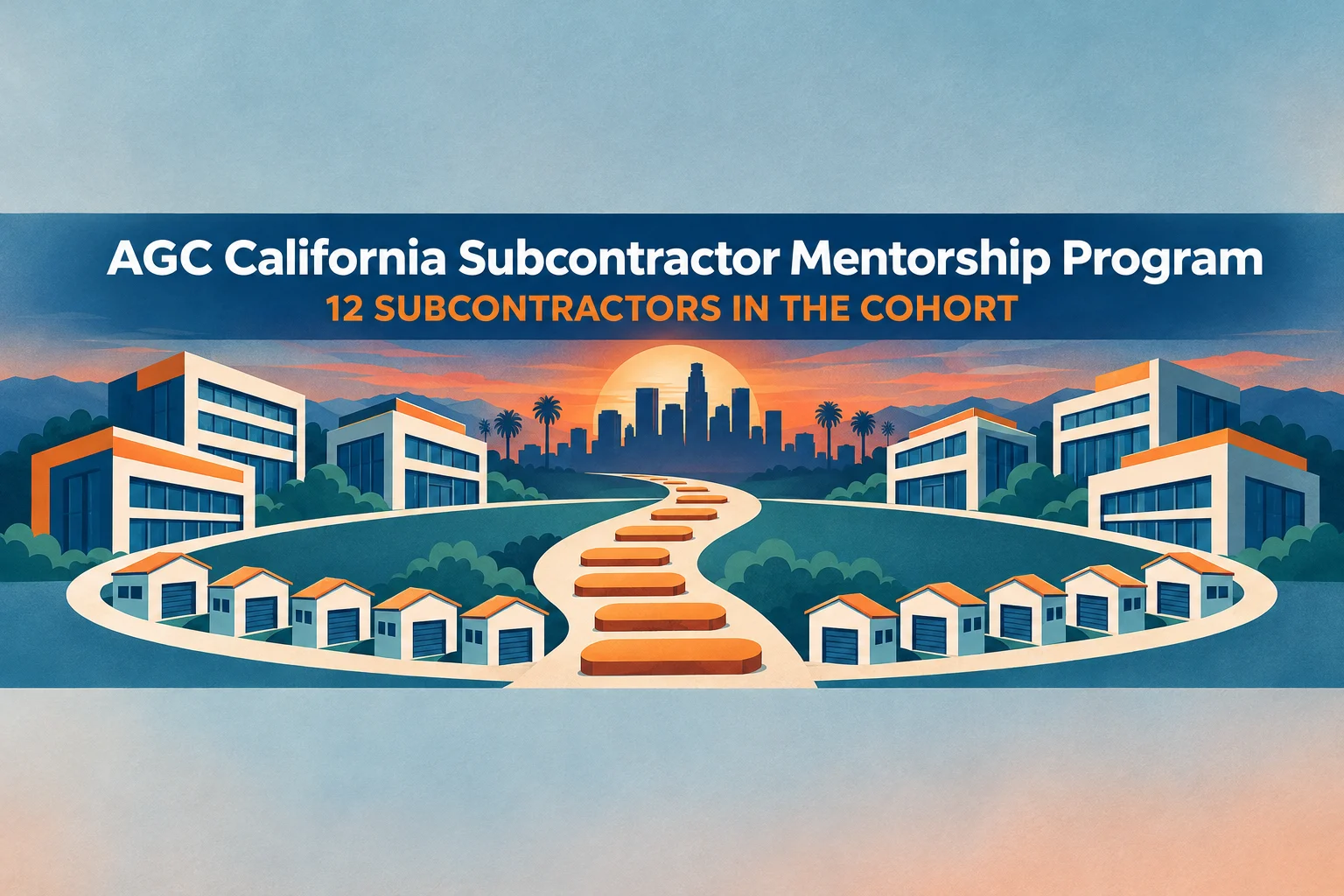
The Associated General Contractors of California and six major builders have launched the Prime Pipeline Alliance. It is a mentorship program for small, local and diverse subcontractors in Los Angeles . The effort was announced on Oct. 14, and the first cohort has 12 subcontracting firms .
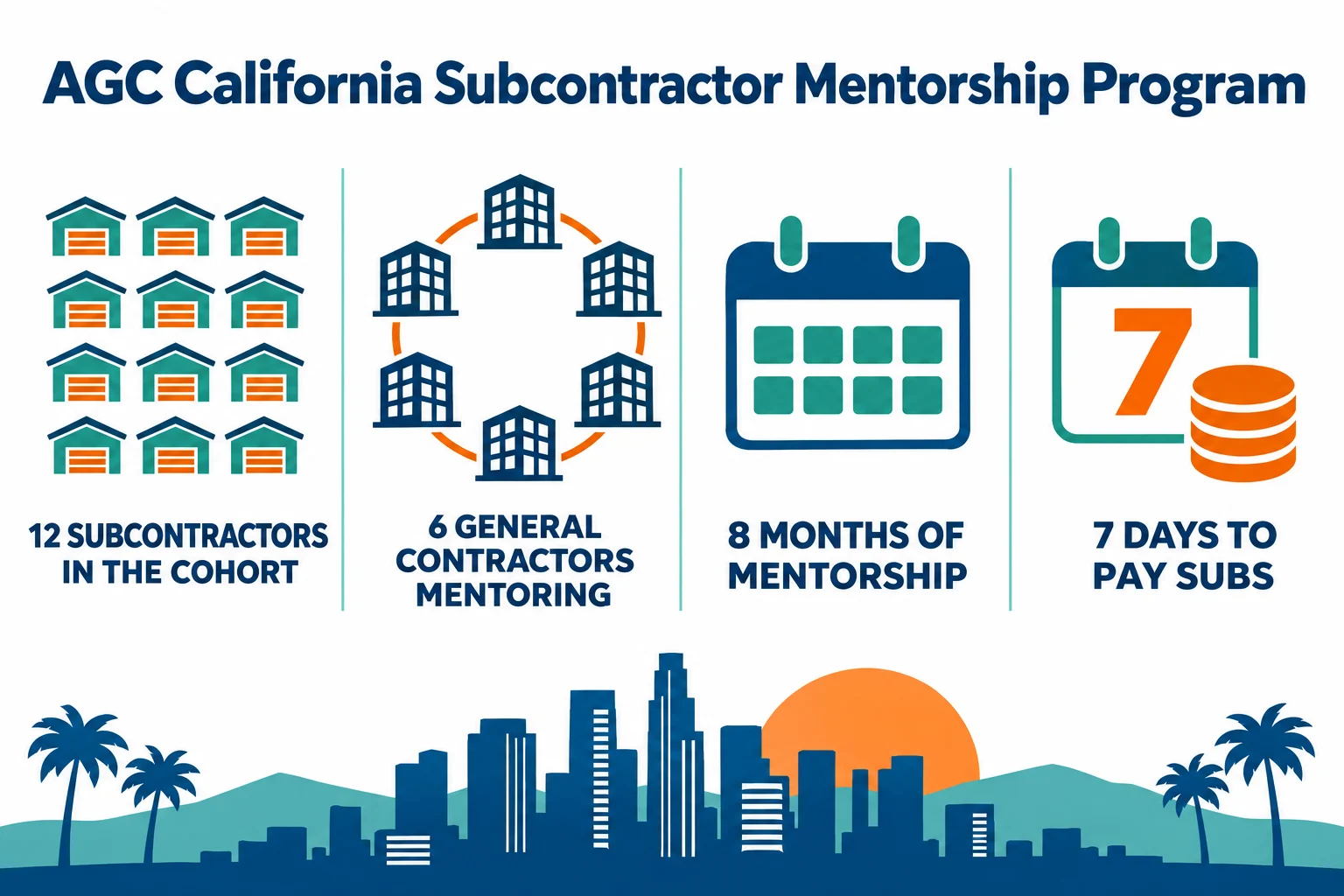
The AGC California subcontractor mentorship program runs for eight months. It pairs a group of trade firms with six builders: Webcor, Turner Construction, Skanska, PCL Construction, Hensel Phelps and Clark Construction . For a California sub, it signals that large builders want more local trade partners they can count on. Being ready for that kind of work starts with the basics: a clean license, a bond on file and solid payment habits.
The program is built for small, local and diverse subcontracting firms in Los Angeles . It covers trades across the industry. The firms in the cohort include plumbers, electricians and concrete contractors .
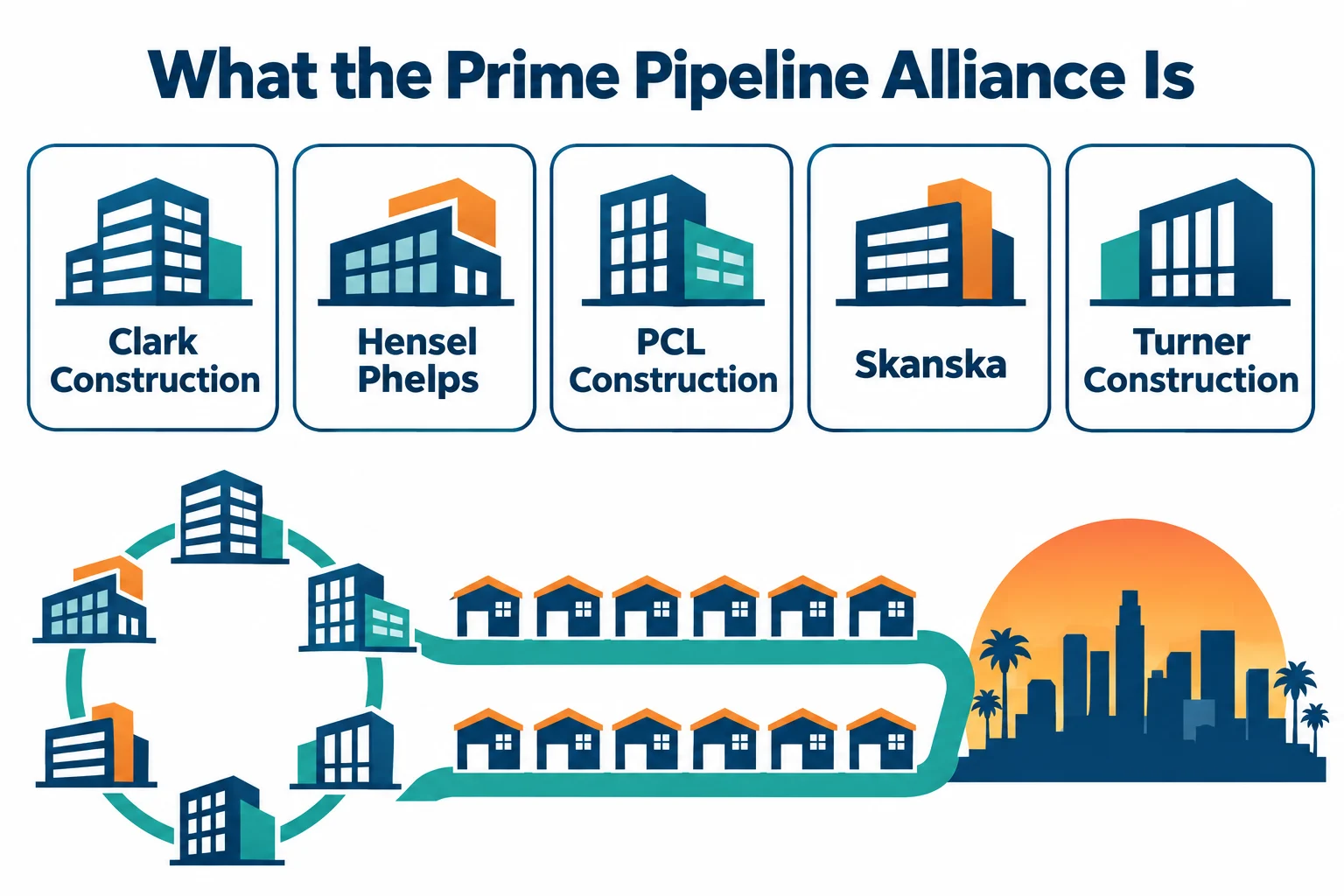
Three groups set it up: the AGC of California, the AGC Construction Education Foundation and Greater Los Angeles African American Chamber of Commerce . Six builders then joined .
Most mentoring pairs one mentor with one firm. This program takes a different route. All six builders work with every firm in the group, using one shared curriculum .
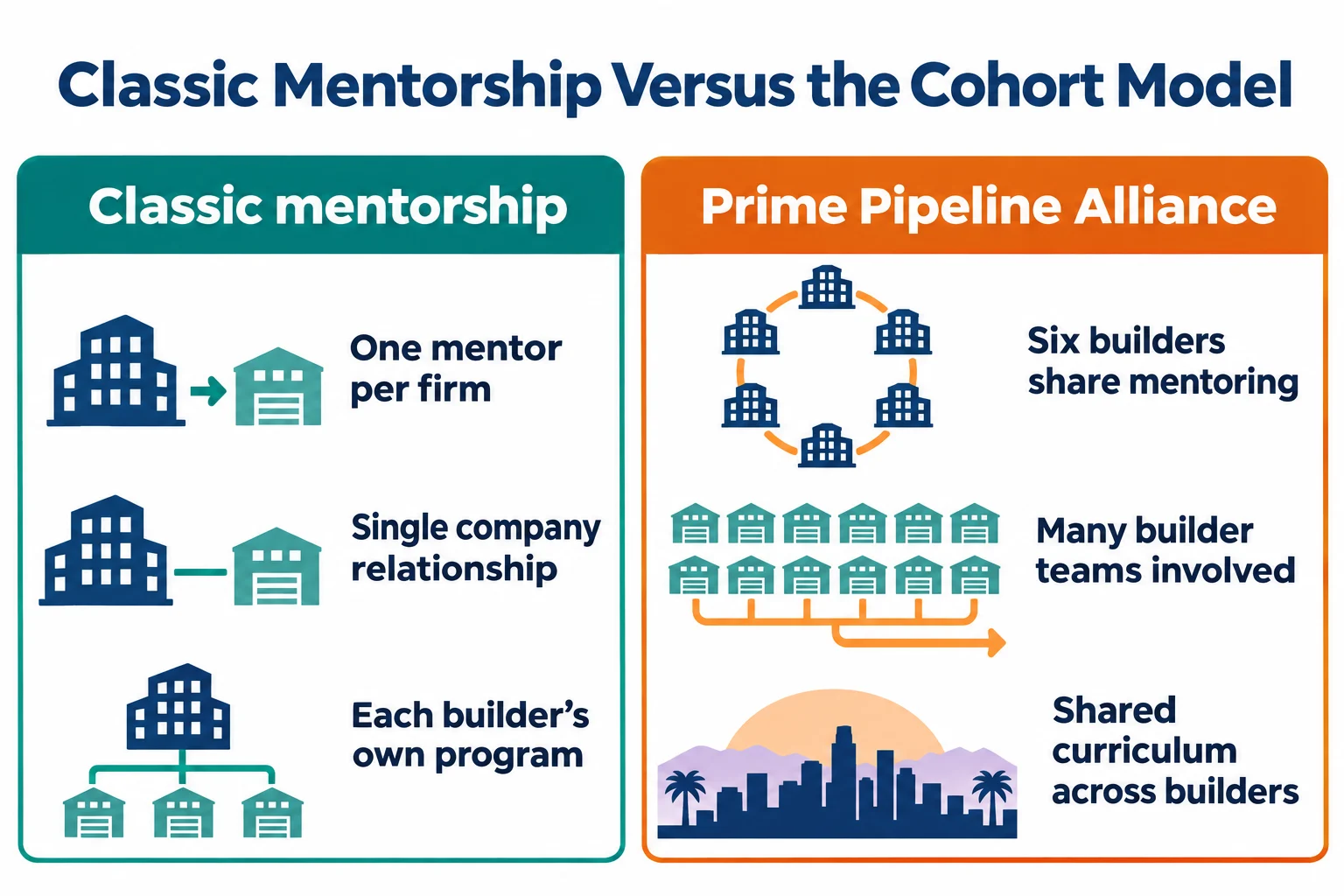
| Point | Classic mentorship | Prime Pipeline Alliance |
|---|---|---|
| Who mentors | One mentor, one firm | Six builders, whole cohort |
| Curriculum | Set by each pairing | One shared curriculum |
| Builder contact | Usually one company | Teams at several builders |
| Length | Varies | Eight months |
According to an AGC of California leader, most of these builders already run their own regional development programs. This is the first time they have come together to mentor a single group .
When big builders mentor as a group, a small sub gets to know many prime teams at once.
Across eight sessions, the firms meet different people on the builders' teams . These are the people who decide who bids, who gets picked and how a scope is set.
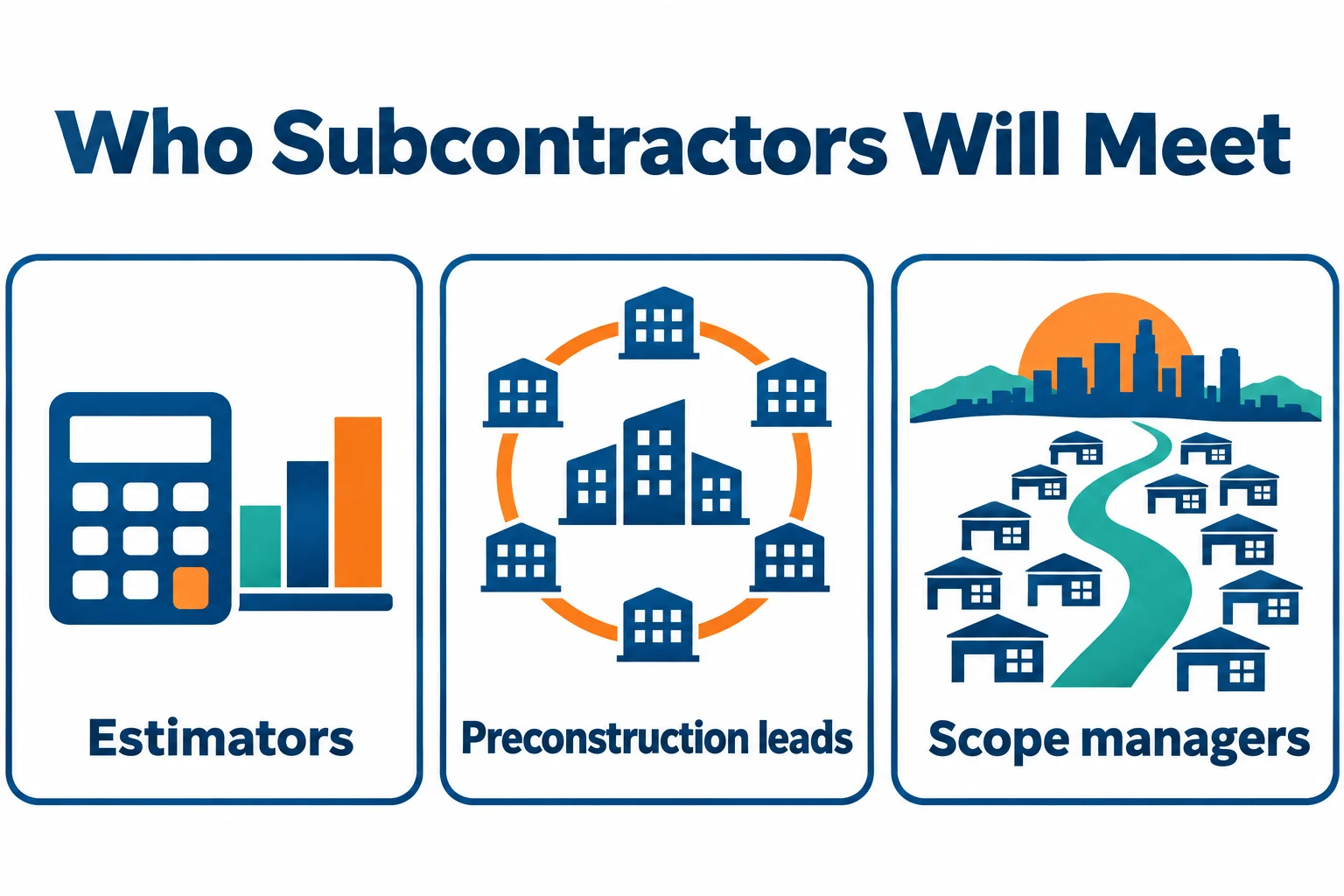
The organizers say this was deliberate. They wanted each builder to show the firms a wider support network inside the company, not just one contact .
The foundation and the chamber tried not to repeat existing efforts. They chose to build on workforce programs already working in the region . Skanska, for one, runs a program that trains smaller, diverse firms and helps them win contracts with the company . Skanska's small business incubator has been linked to $740M in partnerships .
Large builders need trade partners who can price, staff and finish work. A program like this gives small firms a direct line to those teams. If you aren't in this cohort, the lesson still applies: primes are looking for subs who are ready.
Ready usually means your paperwork is in order before the invite comes. Builders tend to ask for proof of a license, insurance and bonding early in prequalification. Having it ready keeps you in the running.
Working under primes means knowing how the money moves. California's contractor law covers when subs get paid and what contracts must include. Check the CSLB law book or the statute for the exact wording.
The licensing chapter does not cover work under $1,000 in total, but only if the job is minor and needs no building permit . Once a firm grows into larger work, that exemption no longer fits. Read § 7048 for the full limits .
Some small firms that want this kind of work aren't licensed yet. In California, an applicant must pass a law and business exam and a trade exam . The C-61 Limited Specialty class skips the trade exam .
After passing, applicants also take the Asbestos Open Book Exam and sign its verification form . That form goes in with the renewal or bond verification and license fee notice . If the signed form is not sent in with that notice, CSLB cannot process the license .
The Prime Pipeline Alliance is an eight-month program where six large builders mentor small, local and diverse subcontractors in Los Angeles . Whether you're in a program or not, get ready the same way.
It is an eight-month mentorship program from AGC of California and partners for small, local and diverse subcontractors in Los Angeles .
Twelve firms from a range of trades are in the first group .
Six general contractors joined: Webcor, Turner, Skanska, PCL, Hensel Phelps and Clark .
The cohort spans the industry and includes plumbers, electricians and concrete contractors .
Within seven days of receiving a progress payment, unless agreed otherwise in writing, under § 7108.5 of the CSLB Law Book .
From Jan. 1, 2026, a home improvement contract must disclose subcontractors if the consumer asks, including license number and classification .
A law and business exam and a trade exam, except the C-61 Limited Specialty class, which skips the trade exam .
Call (800) 682-1552 or visit suretyfirst.com.
General information only, not insurance or legal advice.
Call us today at 1-800-682-1552 to speak with a licensed contractors insurance specialist.
Mon-Fri 7:30am-5:00pm
Or
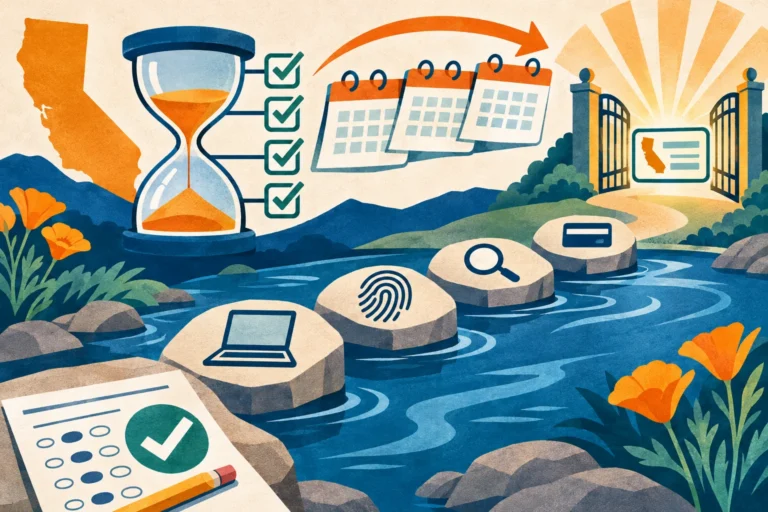
How long it takes to get licensed and bonded in California, the steps after the exam, and what can stall a CSLB license. Plain guide for contractors.

We all know what it’s like to take that full inventory of all the different gadgets, tools, and general items you have in your kitchen: Maybe it’s because…

When it comes to real estate, few things shape price like location. The right setting can turn an average home into a dream property — especially if it…
Contractor Advantage by Surety First