



How long it takes to get licensed and bonded in California
How long it takes to get licensed and bonded in California, the steps after the exam, and what can stall a CSLB license. Plain guide for contractors.

Posted on: November 13, 2026
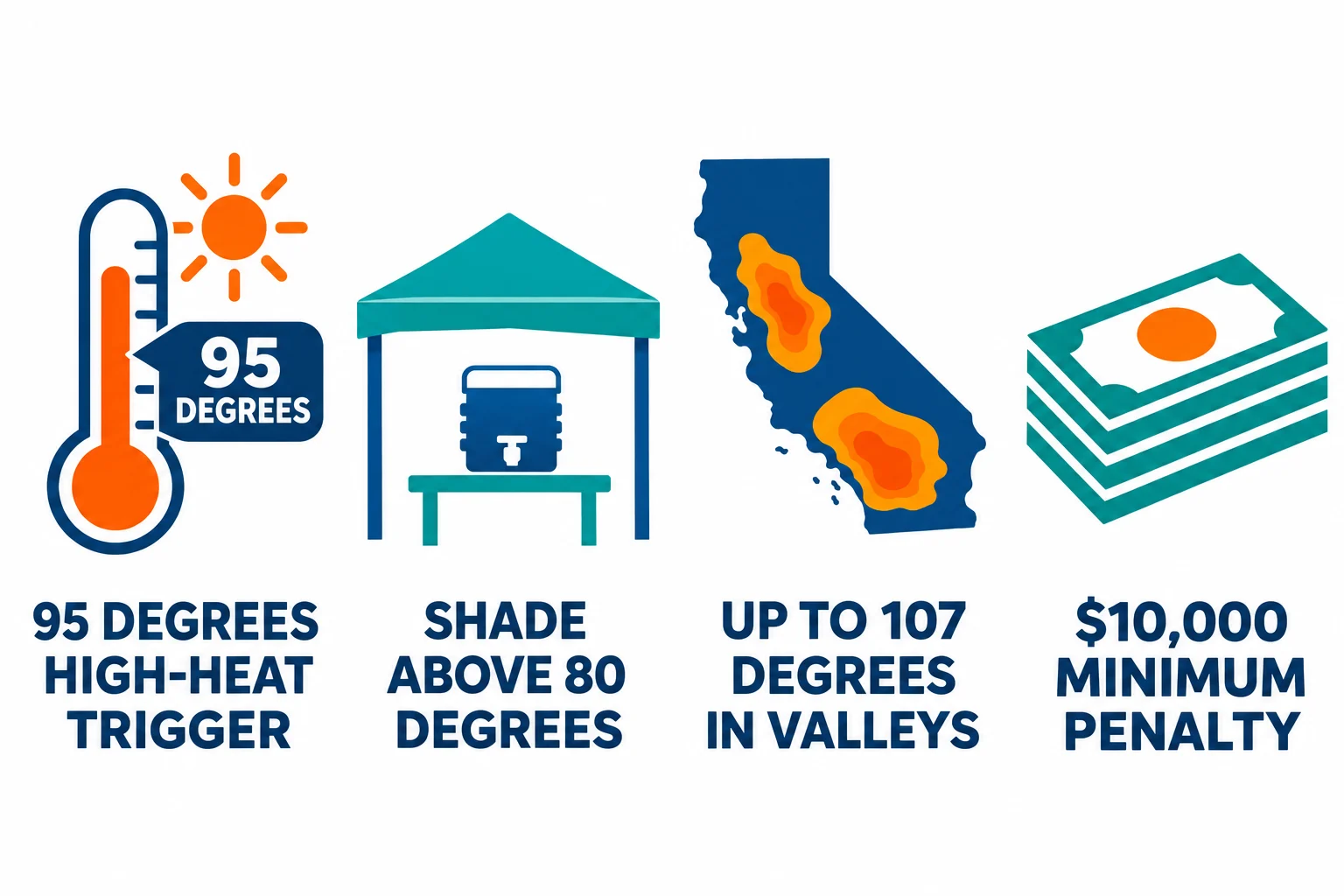
Cal/OSHA is reminding California employers to protect their crews as an extreme heat warning covers the Los Angeles and San Diego regions from October 2 through October 8. Daytime highs could reach 107 degrees in some valleys. Construction is one of the industries that must add extra protections once outdoor temperatures hit 95 degrees.
The state's Department of Industrial Relations issued the reminder on October 2, 2026. It pointed employers to shade, water and rest for anyone working in the heat. For a California contractor, the Cal/OSHA heat rules for construction are a standing legal duty, not a suggestion. A crew working through this week's heat needs a plan already in place before the first hot afternoon.
The heat alerts cover both ends of the state, with different timing in each region. Forecasts can shift, so Cal/OSHA says employers should keep checking local conditions.
Cal/OSHA's Heat Illness Prevention Standards make employers legally responsible for protecting workers from heat illness. The rules reach both indoor and outdoor workplaces. A contractor with a crew in the field and staff in a shop or warehouse may fall under both.
The indoor rule covers most indoor workplaces, including warehouses. Once the inside temperature reaches 82 degrees, employers must act. Required steps include water, rest, cool-down areas and training.
Construction is on Cal/OSHA's short list of industries with extra duties in high heat. Landscaping, agriculture, oil and gas extraction, and hauling of construction materials or other heavy loads are on it too. When an outdoor site reaches or passes 95 degrees, the added steps kick in.
| Protection | Standard outdoor rule | Construction at 95°F or more |
|---|---|---|
| Fresh water | Required | Required |
| Shade | In place above 80°F | In place |
| Cool-down breaks | On request | On request |
| Regular checks for heat illness | Not listed as extra step | Required |
| Effective communication methods | Not listed as extra step | Required |
On a 95-degree jobsite, water and shade are only the starting point for a construction crew.
Indoor and outdoor employers alike must keep a written heat illness prevention plan. They must also train supervisors and workers well enough to spot common heat illness symptoms. That training should cover what to do in an emergency.
Cal/OSHA runs a special emphasis program on heat illness. It combines enforcement of the heat standards with outreach and training in several languages. Workers can file confidential complaints about safety hazards with Cal/OSHA district offices.
The contractors' state licence board has its own penalty rules. A sole owner licensee who employs workers without keeping workers' compensation coverage faces a minimum civil penalty of $10,000 for each violation.
This heat wave is a good time to check your crew's setup against the Cal/OSHA heat rules for construction. Take these steps before the next hot shift.
The extra protections apply when an outdoor worksite reaches or passes 95 degrees.
Shade must be in place once it is hotter than 80 degrees.
Yes. Most indoor workplaces are covered, and employers must act once the inside temperature reaches 82 degrees.
Yes. Employers must keep a written plan and train supervisors and workers on heat illness symptoms and emergency steps.
They include watching workers regularly for signs of heat illness and setting up effective ways to communicate with them.
It runs from 10 a.m. on October 2 to 8 p.m. on October 8.
Under the CSLB Law Book, a sole owner licensee faces a minimum civil penalty of $10,000 per violation. See the Law Book for the full rule.
Call (800) 682-1552 or visit suretyfirst.com.
General information only, not insurance or legal advice.
Call us today at 1-800-682-1552 to speak with a licensed contractors insurance specialist.
Mon-Fri 7:30am-5:00pm
Or

How long it takes to get licensed and bonded in California, the steps after the exam, and what can stall a CSLB license. Plain guide for contractors.

We all know what it’s like to take that full inventory of all the different gadgets, tools, and general items you have in your kitchen: Maybe it’s because…
When it comes to real estate, few things shape price like location. The right setting can turn an average home into a dream property — especially if it…
Contractor Advantage by Surety First